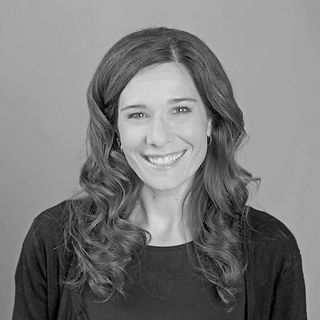
The new CR report is here. In this interview, Robert Metzke, Head of Corporate Responsibility, explains how Deutsche Telekom has progressed in the areas of environmental and climate protection, social responsibility, and good corporate governance – and why “net zero” is only the beginning.
Robert, you have been responsible for Group Corporate Responsibility since the beginning of the year. What has been a personal highlight for you so far?
Robert Metzke: Without a doubt, the moment we announced climate neutrality across the Group’s own operations. It is something special when an initially abstract goal becomes reality. We have shown that ambitious, science-based climate targets can actually be achieved. Many teams worked on this internationally over many years – at our locations in Germany, but also in our national companies around the world. We made adjustments in many areas and continuously improved: in the procurement and storage of renewable energy, in network expansion and modernization, in IT, facility management, and e-mobility. And very importantly, we also made progress in circularity.
The new CR report is full of numbers. So here comes the little challenge again: if you had to limit yourself to just one number – which one would it be?
Robert Metzke: The number six.
Why?

Robert Metzke: Because it shows how strongly digitalization and sustainability reinforce one another. In 2025, customers in Germany were able to use Deutsche Telekom’s digital solutions to save, in purely mathematical terms, more than six times as much CO₂ as was generated by Telekom’s own operations. In total, this corresponds to around 23.5 million metric tons of CO₂e. It makes one thing very clear: we are not only reducing our own emissions, we are also enabling others to act more sustainably.
Speaking of technology and innovation: where do you currently see the greatest leverage?
Robert Metzke: Clearly in the network and in IT. Modern technologies – including AI – help us use energy more efficiently, for example through intelligent control in mobile communications or through highly efficient data centers. At the same time, we already ensure during the development of new technologies that they are as resource efficient as possible. Sustainability is therefore no longer an afterthought, but an integral part of the design process from the very beginning.
You already mentioned technology – another focus area is the circular economy. What does that mean in concrete terms?
Robert Metzke: Our goal is that by 2030, nearly all products and technical components we place on the market can be returned to the cycle – from network components to a large proportion of our end-user devices. To achieve this, we are extending product lifecycles, focusing on refurbishment and recycling, and developing new metrics such as the Telco Circularity Score. This is an important lever for conserving resources while also strengthening our company’s resilience. We still dispose of far too many valuable raw materials and electronic devices and import new materials through sometimes unstable supply chains – instead of making smart use of what we already have. That has to change!
Was there anything over the past year that particularly surprised or pleased you?
Robert Metzke: I am continually impressed by how much we can achieve through technology. Our solutions help customers reduce emissions on a large scale. At the same time, I see how strong the commitment within the company is – also in terms of social engagement. Millions of people benefit from our offerings for digital inclusion or from our support in crisis situations. That shows how broadly we understand responsibility.
And socially speaking – are we doing enough?
Robert Metzke: We are making a major contribution, but we will only be satisfied when everyone is truly included. Digital inclusion is central for us: we want all people to have access to digital technologies and digital skills. That is our core business.
In addition, around 41 million people directly benefited from our social engagement activities in the past year alone. Our employees contributed more than 215,000 volunteer hours – equivalent to around 27,000 working days.
One key focus is education and digital inclusion – for example through initiatives such as Teachtoday or specific programs for schools and students. And in times of crisis, we are there when we are needed. At the same time, we are taking a clear stand against hate speech online.
What comes next – what are the next steps after net zero?
Robert Metzke: Now it is about consistently continuing the transformation. That means: even deeper integration of sustainability into our core business, more progress along the supply chain, further efficiency gains in the network and IT, and a clear focus on the circular economy. And not for its own sake, but because sustainability pays off – for people, the environment, and the Group. At Deutsche Telekom, responsibility and economic success go hand in hand. It concerns everyone, connects us, and provides tremendous energy for our Telekom flywheel.